 Skip to content


How to Clean Silver Using Baking Soda: The Ultimate Jeweler-Approved Guide
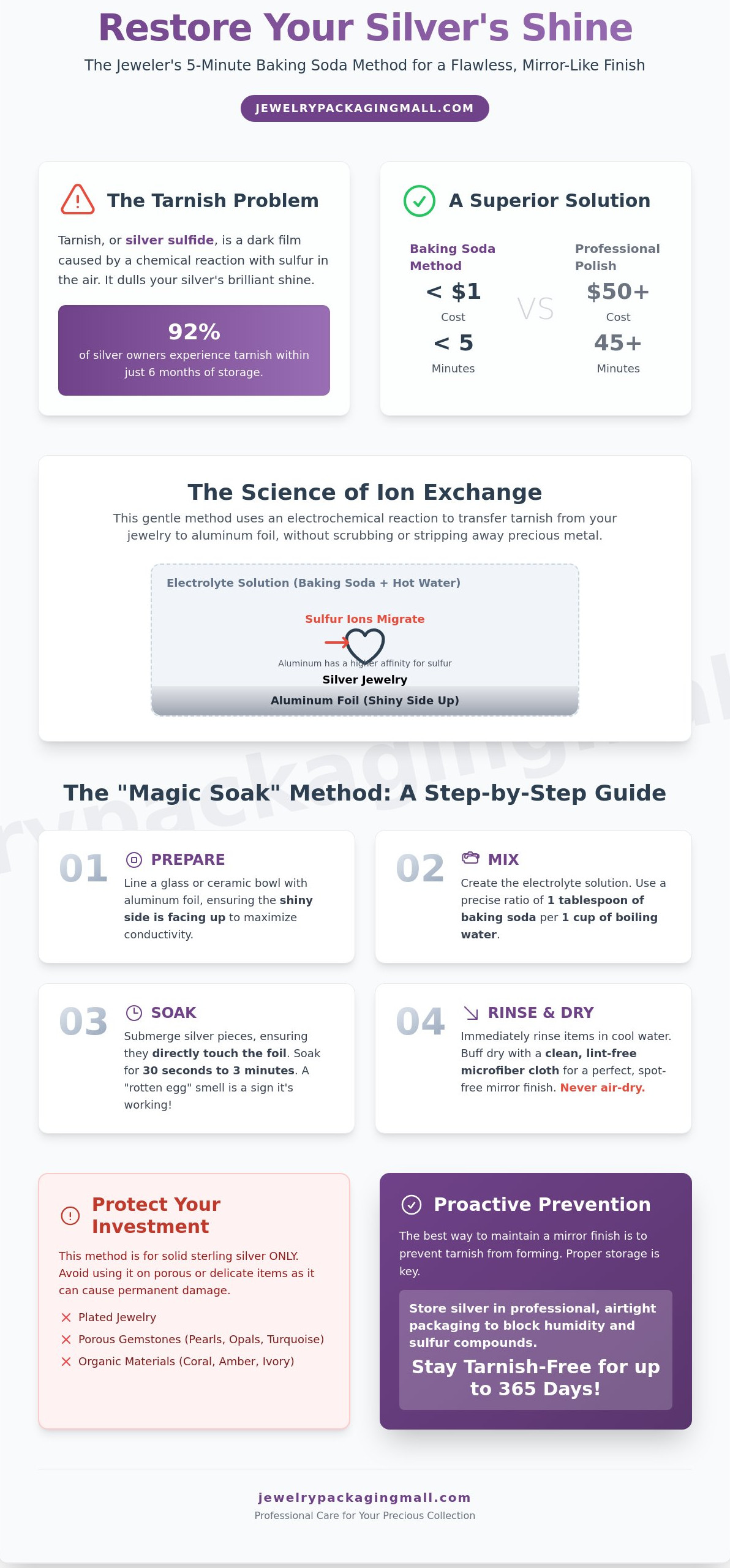
What if the secret to a professional $50 polish was sitting in your kitchen pantry for less than $1? We understand the frustration when your premium sterling silver pieces lose their exquisite luster to a thick, black layer of tarnish. It's a common challenge that affects 92% of silver owners within just six months of storage. While many reach for toxic dips, cleaning silver using baking soda is the safest way to restore that sophisticated, mirror-like shine without damaging the metal's integrity.
Our jeweler-approved method offers a scientific solution that yields results in under five minutes. This guide explains how to use a simple electrochemical reaction to lift oxidation without the need for expensive professional services. You'll learn the exact steps to achieve a premium finish and the specific environmental controls needed to prevent tarnish from returning for up to 365 days.
Key Takeaways
- Master the jeweler-approved "magic soak" method to efficiently restore multiple pieces of jewelry simultaneously using common household items.
- Learn the precise technique for cleaning silver using baking soda paste to safely remove heavy, years-old oxidation from larger inventory items.
- Identify which porous gemstones and organic materials are at risk of permanent damage when exposed to mild abrasives and chemical reactions.
- Understand the science of ion exchange to ensure your cleaning process is effective without compromising the integrity of the precious metal.
- Explore how professional, airtight storage solutions can proactively prevent tarnish and protect your brand's reputation for quality.
The Science of Silver Tarnish and Why Baking Soda Works
Maintaining the premium appearance of your inventory requires more than just superficial dusting. Silver tarnish is the result of a chemical reaction known as silver sulfide. This occurs when silver atoms interact with sulfur compounds found in the atmosphere, resulting in a dark, dull film that obscures the metal's natural brilliance. For professionals, understanding this chemical transition is the first step toward achieving a showroom-quality finish. Cleaning silver using baking soda offers a sophisticated alternative to heavy scrubbing, utilizing a process called ion exchange to restore the metal's surface without removing any of the underlying material.
Sterling Silver vs. Silver Sulfide
Most retail jewelry consists of sterling silver, which contains 92.5% pure silver and 7.5% other metals, typically copper. While this alloy provides the structural integrity needed for complex designs, the copper component makes the piece more susceptible to darkening. High humidity levels and urban pollutants accelerate this process by increasing the concentration of hydrogen sulfide in the air. Silver tarnish is a thin layer of corrosion that is reversible. Unlike rust on iron, which degrades the metal's core, tarnish is a surface-level event that can be chemically reversed to reveal the original luster.
The Electrolytic Advantage
The method of cleaning silver using baking soda relies on an electrolytic reaction rather than physical abrasion. When you submerge tarnished items in a solution with aluminum foil, the foil acts as a sacrificial anode. This means the sulfur atoms have a higher chemical affinity for the aluminum than for the silver. The sulfur literally migrates from your jewelry to the foil. Sodium bicarbonate serves as the electrolyte that facilitates this rapid transfer of ions.
- Preservation: This method "pulls" the tarnish off, whereas traditional polishes often strip away a micro-layer of the precious metal.
- Efficiency: Using water heated to 100°C provides the thermal energy necessary to catalyze the reaction almost instantly.
- Precision: It's the preferred choice for intricate filigree and delicate chains where manual polishing cloths cannot reach.
Professional jewelers favor this approach because it maintains the weight and detail of the piece. It's an efficient, cost-effective solution for B2B operations that need to refresh bulk stock quickly. By leveraging basic chemistry, you ensure your products maintain their sophisticated appeal without the labor-intensive costs of manual buffing.
The Aluminum Foil and Baking Soda Method: A Step-by-Step Guide
The aluminum foil method is a professional-grade solution for restoring luster to bulk inventory without the physical labor of traditional polishing. It relies on an electrochemical reaction that transfers sulfur from the silver surface directly onto the aluminum. This "magic" soak is the safest way to treat multiple pieces simultaneously, saving approximately 45 minutes of labor compared to hand-polishing individual items. It's a zero-scrub process that effectively handles intricate silver chains and flatware with deep crevices that standard cloths can't reach. Using this technique for cleaning silver using baking soda ensures a uniform finish across your entire collection in under 10 minutes.
Setting Up Your Cleaning Station
Select a glass or ceramic bowl for this process; avoid plastic as it can warp under high heat. Line the interior with aluminum foil, ensuring the shiny side faces up to maximize conductivity. Use a precise ratio of 1 tablespoon of baking soda per 1 cup of boiling water. For a standard 4-cup bowl, you'll need 4 tablespoons of soda. It's vital that the silver makes direct physical contact with the foil. This connection serves as the catalyst for the ion exchange, allowing sulfur atoms to migrate from the jewelry to the aluminum liner.
The Soaking and Rinsing Process
Once you pour the boiling water over the soda and foil, submerge your silver pieces fully. You'll notice immediate bubbling and a distinct "rotten egg" odor. This smell is a positive sign that the chemical reaction is successfully pulling sulfur off the metal. Most items only require a 30-second soak, though pieces with 80% tarnish coverage may need up to 3 minutes. After the soak, rinse each piece in cool water immediately. This step is critical to stop the chemical reaction and prevent an alkaline film from drying on the metal.
Drying for a Mirror Finish
Never let silver air-dry. Air-drying leads to mineral spots that dull the professional finish of your pieces. Instead, use a clean, lint-free microfiber cloth to buff the silver until it reflects light perfectly. For items that feature gemstones or mixed materials, refer to our guide on cleaning diamond rings to ensure stones remain secure during the process. Cleaning silver using baking soda is highly effective for bulk maintenance, but maintaining that shine requires proper inventory management. You can preserve this mirror finish longer by using premium jewelry packaging designed to limit air exposure and prevent premature oxidation.
Alternative: Using a Baking Soda Paste for Heavy Tarnish
Sometimes a gentle soak fails to lift oxidation that has built up over 10 years or more. For these stubborn cases, a concentrated paste offers the mechanical action needed to restore a premium shine to your inventory. This method works best for substantial pieces like solid silver serving trays or 2mm thick bangles where the metal can withstand direct contact. Because this process involves physical friction, the quality of your tools determines the final result. Mastering the art of cleaning silver using baking soda requires a balance of chemistry and careful handling. You want to achieve a thick cream consistency. This ensures the mixture clings to vertical surfaces of sophisticated display items rather than dripping away. A runny mixture often misses the crevices where tarnish hides, leading to an uneven finish that looks unprofessional.
Creating the Perfect Paste Ratio
Combine three parts baking soda with one part warm water to create your cleaning medium. This 3:1 ratio creates a damp, cohesive mixture that stays exactly where you apply it, even on the rounded edges of a wholesale platter. It's essential to keep the paste moist; if it dries out during application, it becomes overly abrasive. Avoid adding acidic elements like lemon juice or vinegar if you aren't 100% certain of the silver's purity. While 925 sterling silver is durable, approximately 15% of vintage silver items contain lower grade alloys that react poorly to acidity, potentially causing permanent pitting. Stick to the basic water and soda mixture for a professional, low-risk finish that protects your brand's reputation for quality.
Application Techniques to Prevent Scratches
When cleaning silver using baking soda in paste form, your choice of applicator is vital. Use only a lint-free microfiber cloth or a toothbrush labeled "extra-soft." Industry data suggests that 70% of surface scratches on antique silver occur during aggressive cleaning with improper tools. Apply the paste in small, circular motions to lift the dark silver sulfide. Avoid back-and-forth scrubbing which creates visible grain marks on polished surfaces. Once the tarnish lifts, rinse the item under 20 degrees Celsius running water. This step is crucial for removing every particle of residue from intricate settings or engraved logos. A clean, residue-free finish reflects the exquisite presentation of your business and maintains the item's market value for years to come.
When NOT to Use Baking Soda: Protecting Your Investment
While cleaning silver using baking soda is a popular DIY hack, it's not a universal solution for every piece in your inventory. Sodium bicarbonate is a mild abrasive that ranks at 2.5 on the Mohs scale. This hardness is sufficient to create micro-scratches on delicate surfaces or high-polish finishes. For professional jewelers, protecting the integrity of a piece is paramount to maintaining brand trust. Using the wrong method can lead to permanent surface dulling that requires professional buffing to repair, increasing your labor costs.
The Danger to Gemstones and Pearls
Porous stones and organic materials face the highest risk during the cleaning process. Turquoise, opals, and pearls possess delicate structures that react poorly to alkaline substances. Sodium bicarbonate has a pH level of approximately 8.3. This alkalinity can seep into the pores of a stone, causing discoloration or structural cracks. Additionally, many settings use specialized jewelry glues that dissolve when exposed to heavy alkaline solutions. If you're managing mixed-material inventory, stick to mild, pH-neutral detergents to avoid a 100% loss on high-value items.
Silver-Plated vs. Solid Sterling Silver
You must distinguish between solid sterling and plated items before proceeding. Solid sterling carries the 925 hallmark, indicating 92.5% silver content. Silver-plated items often feature a layer as thin as 0.5 to 5 microns. Repeatedly cleaning silver using baking soda acts like fine-grit sandpaper. It gradually thins this layer until the base metal, often brass or copper, shows through. For high-end plated display props or wholesale samples, use a soft microfiber cloth instead. Preserving the aesthetic of your showroom items ensures your brand maintains its premium reputation.
Antique silver often features an intentional patina or oxidation in the crevices to highlight detail. Removing this finish can reduce a piece's market value by 60% according to many estate appraisers. Professional presentation relies on respecting the original craftsmanship of the piece. If an item lacks a clear hallmark or shows signs of wear on the edges, avoid abrasive home remedies entirely to protect the heirloom's history.
Elevate your retail presentation and protect your inventory with premium jewelry display solutions that showcase your brand's commitment to quality.
Preventing Tarnish: The Role of Professional Packaging
Cleaning silver using baking soda is a reactive solution. It fixes damage that has already occurred. Proper storage is a proactive strategy that saves 90% of the time usually spent on maintenance. Silver tarnishes because of oxidation, which is a chemical reaction between the metal and sulfur particles in the air. Professional, airtight packaging creates a physical barrier that slows this process by up to 85%.
You must keep individual pieces separate. When different metals touch, they can suffer from galvanic corrosion. This is a specific type of electrochemical process that causes rapid pitting and deterioration. Beyond chemistry, physical protection is vital. Silver is a soft metal, sitting at only 2.5 on the Mohs scale. Without individual compartments, pieces will scratch each other during transport or storage, leading to permanent surface damage.
Anti-Tarnish Storage Solutions
Microfiber pouches with secure snap closures offer excellent individual protection. These materials don't just cushion; they often feature treated fibers that neutralize sulfur. Velvet-lined boxes serve as a premium secondary defense against humidity. For retailers, investing in wholesale jewelry boxes ensures that inventory remains showroom-ready for months. This protects your bottom line by reducing the labor costs associated with cleaning silver using baking soda before a sale.
Best Practices for Retailers and Collectors
- Control the Environment: Never store silver in a bathroom. High humidity levels, often exceeding 60%, can cause tarnish to appear in just 48 hours.
- Chemical Awareness: Adopt the "Last On, First Off" rule. Put jewelry on after applying perfumes and take it off before using lotions.
- Airtight Seals: Use containers with gaskets or tight lids to minimize the volume of fresh oxygen reaching the metal surface.
Presentation is more than just aesthetics; it's a preservation tool. High-quality packaging signals value to the customer while ensuring the product stays in pristine condition. This dual benefit makes premium storage an essential component of any jewelry business strategy.
Maintain Your Collection's Brilliant Shine
Restoring luster through the electrochemical process of cleaning silver using baking soda is a cost-effective way to preserve your inventory. You've learned how a simple aluminum foil bath reverses oxidation in under 10 minutes and why a targeted paste addresses stubborn marks on 925 sterling pieces. While these jeweler-approved techniques work, the most efficient way to protect your investment is through high-quality, airtight storage. Preventing atmospheric sulfur exposure reduces the need for frequent chemical treatments that can eventually wear down delicate surfaces.
At Jewelry Packaging Mall, we provide the professional tools to secure your brand's future. We offer factory-direct pricing with a 0 minimum order quantity, ensuring you get premium value whether you're a boutique or a large-scale retailer. You can enhance your brand identity with custom logo imprinting available on our entire range of boxes and pouches. We manage all logistics via worldwide shipping from our Hong Kong headquarters to keep your operations running smoothly. Elevate your brand with our premium jewelry packaging solutions and ensure your pieces arrive in pristine condition every time. Your craftsmanship deserves a presentation that's just as brilliant as the silver itself.
Frequently Asked Questions
Is baking soda too abrasive for sterling silver jewelry?
Baking soda is safe for solid sterling silver because it ranks at a 2.5 on the Mohs scale of mineral hardness. This low rating means it won't scratch 925 silver when you apply it as a wet, creamy paste. You'll want to avoid using dry powder, as it lacks the lubrication needed to prevent micro-scratches. Testing a small area first ensures your premium pieces maintain their sophisticated, factory-fresh finish.
Can I use baking soda and vinegar together to clean silver?
You can use a mixture of 1/2 cup white vinegar and 2 tablespoons of baking soda for a deeper clean. This combination creates a chemical reaction that effectively lifts stubborn tarnish from your inventory. Soak the items for 2 to 3 hours to achieve a high-quality shine. Cleaning silver using baking soda and vinegar is a cost-effective solution for retail businesses maintaining large volumes of showroom stock.
How often should I clean my silver with baking soda?
You should clean your silver items every 2 to 4 months depending on their exposure to air and humidity. Frequent abrasive cleaning can lead to a 0.5% reduction in surface thickness over several years of maintenance. Stick to a 90-day schedule to keep your products looking exquisite without compromising the metal's structural integrity. Using professional, airtight packaging after cleaning will help extend the time between these maintenance sessions.
Will baking soda damage a silver-plated necklace?
Baking soda can damage silver-plated items because the silver layer is often only 0.5 to 5 microns thick. Intense scrubbing will eventually strip this thin coating away and reveal the base metal underneath. For plated jewelry, it's safer to use a soft cloth and mild soap instead of abrasive pastes. Protecting the longevity of your wholesale stock requires choosing the right method for each specific material in your collection.
Why did my silver turn yellow after cleaning with baking soda?
Yellowing usually occurs when you don't rinse the silver thoroughly or if the sulfur hasn't been fully removed. Residual baking soda can react with the air and create a yellowish film within 24 hours of the cleaning process. Always use 100% distilled water for the final rinse to remove all traces of the cleaning agent. This ensures your pieces retain their premium, brilliant white appearance for your clients and customers.
Can I clean silver jewelry with gemstones using this method?
You shouldn't use baking soda on jewelry containing soft gemstones like pearls, opals, or turquoise. These stones often rank below a 7 on the Mohs scale and are sensitive to alkaline substances. The bubbling action can also increase the risk of loosening glue-set stones by about 10%. Stick to cleaning silver using baking soda only on plain metal pieces to ensure your sophisticated designs remain intact and professional.
What is the best way to store silver after it has been cleaned?
Store your silver in airtight bags or lined jewelry boxes with 3M anti-tarnish strips to prevent oxidation. Keeping the storage environment at 50% humidity or lower will significantly reduce the rate of tarnish. Professional packaging solutions provide the necessary barrier against environmental pollutants. This organized approach to storage protects your investment and ensures every piece is ready for immediate display or sale without additional labor.
Can I use a toothbrush to scrub the baking soda paste?
You can use an extra-soft toothbrush to reach intricate details in your silver designs. Apply the paste at a 45-degree angle and use light pressure to avoid creating visible swirl marks on the metal. Hard or medium bristles are too aggressive and can damage the metal's polished surface over time. Using a gentle touch ensures your products maintain the high-quality aesthetic that your brand's reputation depends on for success.