 Skip to content


The Ultimate Guide to Jewelry Packaging: Elevating Your Brand and Protecting Your Assets
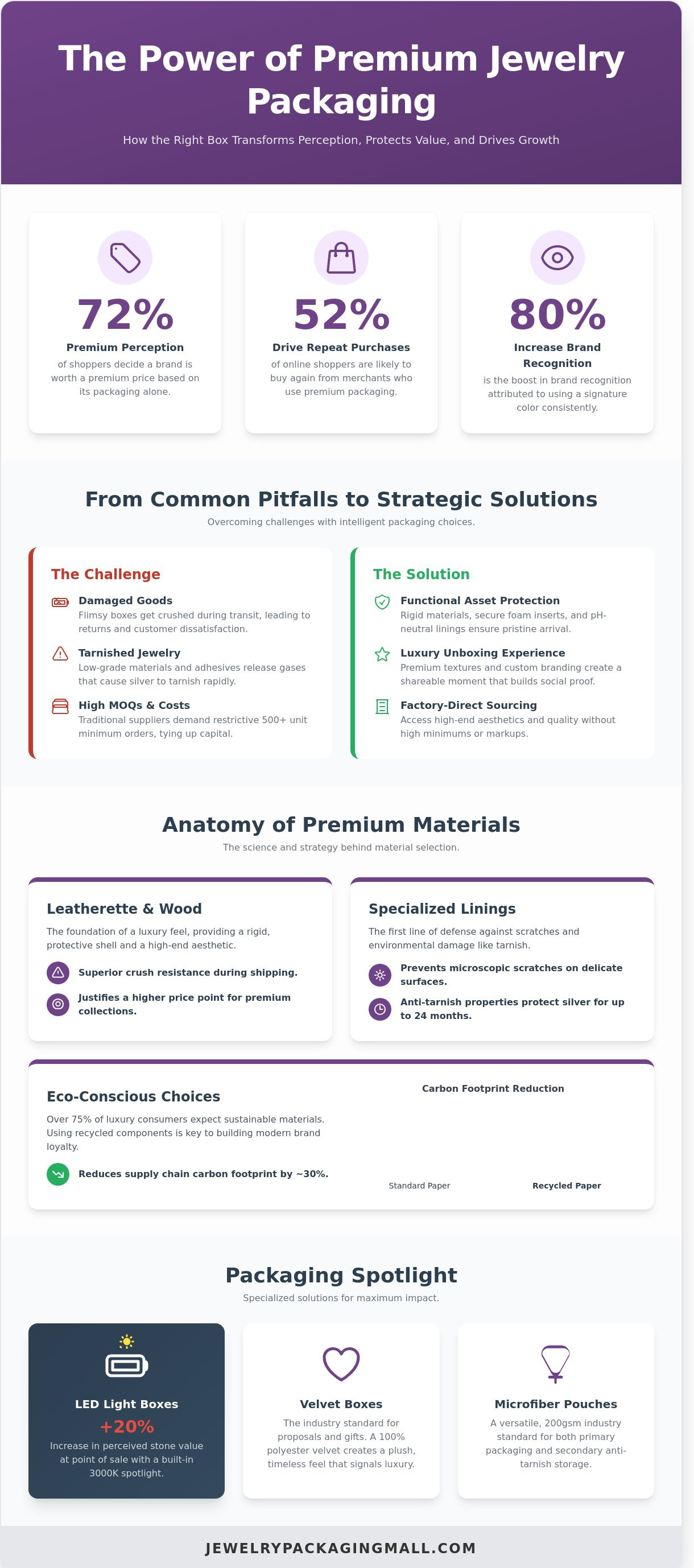
What if your choice of box is the primary reason 72% of shoppers decide your brand is worth a premium price? You've likely felt the sting of a customer receiving a tarnished necklace or a crushed box after a 14-day shipping journey. It's common knowledge in the industry that jewelry packaging is the first physical touchpoint your customer has with your business. When that experience feels cheap, it immediately devalues the craftsmanship of the piece inside. No jeweler wants their exquisite designs associated with flimsy cardboard or generic materials that fail during transit.
We agree that your hard work shouldn't be undermined by poor presentation or restrictive 500-unit minimum order quantities from traditional suppliers. This guide will show you how the right jewelry packaging transforms your products into a luxury brand experience while ensuring maximum protection for every asset. We'll explore how to source cost-effective wholesale solutions, implement specialized anti-tarnish linings, and create a cohesive brand look that scales your retail business effectively. From factory-direct value to custom aesthetics, you're about to learn how to elevate your brand's physical presence.
Key Takeaways
- Understand how premium materials like leatherette and wood act as a "silent salesman" to immediately elevate your brand's perceived value.
- Learn to select the ideal internal support structures to ensure every ring, necklace, and earring remains secure and beautifully presented.
- Discover how custom jewelry packaging can transform a standard delivery into a shareable unboxing experience that builds social media momentum.
- Master the logistics of sourcing factory-direct wholesale supplies to access high-end aesthetics without the burden of high minimum order quantities.
- Identify the critical balance between functional asset protection and the luxury storytelling required to captivate and retain modern consumers.
What is Jewelry Packaging and Why Does it Matter?
Jewelry packaging is the precise intersection of asset protection, visual presentation, and brand storytelling. It functions as your brand's silent salesman, communicating a message of quality and attention to detail before a customer ever touches the product inside. In a competitive retail environment, the unboxing experience is often the first physical touchpoint a buyer has with your business. If the box feels flimsy or looks dated, the customer subconsciously devalues the jewelry, regardless of its actual market price.
Perceived value is a psychological game that successful retailers master through high-quality materials. A 2021 consumer study revealed that 52% of online shoppers are likely to make repeat purchases from merchants that deliver products in premium packaging. This explains why a $50 sterling silver ring presented in a weighted, velvet-lined box can command the same emotional weight as a $500 gold piece. By investing in sophisticated jewelry packaging, you aren't just buying a container; you're purchasing a marketing tool that justifies your price point and builds trust.
The Role of Packaging in Brand Identity
Consistency across your boxes, pouches, and bags creates a professional retail presence that customers recognize instantly. Research from Loyola University Maryland suggests that color increases brand recognition by up to 80%. Choosing a signature palette, such as deep emerald or matte black, allows you to tap into color psychology to evoke feelings of luxury or reliability. Using premium textures like velvet or microfiber signals exclusivity, ensuring your factory-direct wholesale choices reflect a high-end boutique aesthetic.
Packaging as a Protection Mechanism
Beyond aesthetics, jewelry packaging must serve a technical purpose. During a 1,500-mile shipping journey, delicate gemstones face significant risks from vibration and impact. Secure foam inserts with custom cutouts prevent physical scratches that occur when pieces shift during transit. Material chemistry is equally vital; for instance, certain low-grade adhesives in cheap boxes can release gases that cause silver to tarnish in under 30 days. High-quality packaging uses pH-neutral materials to maintain the showroom shine of your inventory. Jewelry packaging serves as a critical dual-purpose tool designed for both strategic marketing and long-term asset preservation.
Anatomy of Premium Jewelry Packaging Supplies
Modern jewelry packaging is an engineering feat that balances structural integrity with tactile luxury. A 2024 industry survey revealed that 68% of boutique owners now prioritize material durability over initial cost. This shift has driven a move from standard cardboard to premium leatherette and sustainably sourced walnut or oak. These materials don't just look better; they provide a rigid shell that protects delicate settings during transit. High-density foam inserts with a 25kg/m³ rating prevent movement, while 100% silk or microfiber linings protect against microscopic scratches. Sustainability is also a core requirement for modern brands. Over 75% of consumers in the luxury sector expect FSC-certified materials or recyclable components. Brands that adopt eco-friendly practices see a 15% increase in customer loyalty according to 2023 retail data. Choosing the right materials demonstrates that you value the customer's purchase as much as they do. It's about building trust through quality.
Consider these primary material benefits for your brand strategy:
- Durability: Leatherette and wood provide superior crush resistance during international shipping.
- Branding: Wood offers a natural, high-end feel that justifies a higher price point for bridal collections.
- Protection: Specialized microfiber linings can prevent the oxidation of silver pieces for up to 24 months.
- Eco-conscious: Using recycled paper reduces the carbon footprint of your supply chain by roughly 30%.
Jewelry Boxes: From Velvet to LED
High-end presentation often starts with the classic velvet ring box. These use 100% polyester velvet for a plush feel that resists crushing. For a modern edge, LED light jewelry boxes use a 3000K warm white spotlight built into the lid. This technology can increase a stone's perceived value by up to 20% at the point of sale. For high-volume retail, 1000g reinforced cardboard boxes offer a professional, cost-effective alternative.
Pouches and Bags: Versatile Alternatives
Pouches serve as both a primary container and a secondary layer of protection. 200gsm microfiber pouches are the industry standard for anti-tarnish storage. They're soft, durable, and easily customized with foil stamping. Satin and organza bags remain popular for charms, adding a sophisticated touch for a low unit cost. Complete the retail experience with 210gsm paper shopping bags. You can explore these wholesale jewelry packaging options to find your brand's perfect fit.
Choosing the Right Packaging for Your Jewelry Type
Strategic jewelry packaging balances physical protection with brand aesthetics. A 2025 industry report indicates that 82% of luxury consumers associate the weight and resistance of a box with the actual value of the item inside. You shouldn't place a heavy 18k gold cuff in a flimsy cardboard mailer. High-density plastic or wooden cores provide the structural integrity needed for heavier assets, while lightweight foam inserts with 0.5mm precision slits keep delicate chains from shifting during transit.
Material compatibility is a technical requirement that many retailers overlook. Sterling silver is prone to oxidation when exposed to specific adhesives or high-sulfur environments. Always select anti-tarnish treated velvet or microfiber for silver collections. Pearls are organic and need to "breathe" to maintain their luster; airtight plastic environments can cause them to dry out. Use silk-lined boxes or specialized jewelry packaging with breathable fabric inserts to ensure these gems remain in showroom condition for years.
Packaging for Rings and Small Accessories
The "snap" of a ring box is a vital tactile signal of quality. High-quality hinges with a 90-degree opening angle provide a secure closure that prevents the ring from falling out if the box is dropped. For e-commerce brands prioritizing shipping efficiency, custom microfiber jewelry pouches bulk orders offer a scratch-free, travel-friendly alternative. These pouches use reinforced snaps to keep small accessories like stud earrings and bands immobilized during the 3 to 5-day shipping cycle.
Necklace and Bracelet Presentation
Tangled chains are a primary cause for retail returns, often resulting in permanent kinks in fine gold wire. Prevent this by using necklace boxes featuring integrated hooks and padded elastic stays. While flat boxes are the standard for logistics, 12-inch velvet display busts are essential for in-store environments. These busts provide a 3D perspective that mimics how the piece sits on the body, allowing overhead lighting to hit facets at the correct angles to maximize brilliance.
The Customization Advantage: Elevating Your Brand
Generic packaging is a missed marketing opportunity that stalls brand growth. When you ship an item in a plain, unbranded box, you lose the chance to reinforce your identity at the most critical touchpoint: the moment of delivery. Customization transforms a simple container into a powerful marketing tool. It signals to your customer that they've purchased a premium product from a professional establishment. By utilizing factory-direct customization, you bridge the gap between a simple transaction and a lasting brand relationship.
Custom Logo Printing and Branding
Selecting the right printing technique is essential for maintaining a sophisticated image. Hot stamping is the gold standard for luxury boxes; it uses high heat and foil to create a reflective, metallic finish that catches the light. For soft goods like microfiber pouches or cotton bags, silk screening is the superior choice. This method uses durable inks that remain vibrant even after repeated use. If you prefer a subtle, tactile brand experience, embossing or debossing creates raised or recessed patterns in the material. These techniques invite the customer to feel the quality of your brand, adding a layer of sensory engagement that flat printing cannot match.
Creating a Memorable Unboxing Experience
The unboxing process is now a public event driven by social media trends. To encourage user-generated content, your jewelry packaging must be photogenic and shareable. Data shows that 40% of consumers are more likely to share a purchase on social media if it comes in premium packaging. You can achieve this by adding "surprise and delight" elements like branded silk ribbons, custom-printed tissue paper, or a thick, matte-finish thank-you note. These layers create anticipation and justify a higher price point for your collection.
Building a cohesive "packaging suite" ensures your brand looks professional across all product lines. This means your ring boxes, necklace cases, and shipping mailers should share a consistent color palette and logo placement. A unified look builds trust and makes your business appear larger and more established to the consumer. Investing in custom jewelry packaging isn't just about aesthetics; it's a strategic move to increase the perceived value of every piece you sell.
Ready to transform your presentation? Explore our custom branding options to start building your professional packaging suite today.
Sourcing Wholesale Jewelry Packaging Effectively
Finding the right supply chain for your brand involves a choice between factory-direct sources and third-party distributors. Third-party vendors typically add a 15% to 25% markup to cover their own operational overhead. By contrast, factory-direct sourcing eliminates these unnecessary layers. This ensures your budget goes directly into the materials and craftsmanship of your jewelry packaging rather than middleman commissions. Direct access to the source also provides a clearer line of communication for custom requests and quality control.
Wholesale Benefits and Factory-Direct Value
Securing a direct line to the manufacturer provides the lowest per-unit costs available. This is vital for maintaining a healthy ROI, especially as your business scales. Many jewelers find that switching to jewelry boxes wholesale direct from the source reduces their annual packaging spend by up to 20%. Logistics expertise is equally important. Professional partners manage global shipping complexities, ensuring that inventory reaches your doorstep without the 30% delays often seen with inexperienced exporters.
The idea that premium presentation requires 1,000-unit minimums is a persistent myth. Traditional manufacturers might demand massive orders that tie up your capital in inventory for 18 months or more. Modern sourcing models have changed this dynamic. You can now access high-end finishes without the burden of excessive stock. When you perform a cost-benefit analysis, look past the base unit price. A cheap box isn't a bargain if shipping fees are inflated or if branding quality is inconsistent. Total landed cost is the only metric that truly impacts your bottom line.
Why Choose Jewelry Packaging Mall?
Jewelry Packaging Mall functions as a strategic partner for over 5,000 global jewelers. We've removed the barriers that previously prevented boutique brands from competing with luxury powerhouses. Our platform is designed for speed, reliability, and brand elevation.
- No Minimum Order Quantity (MOQ): You can order exactly what you need. This is perfect for testing a new collection or managing a startup's tight cash flow.
- Comprehensive Inventory: Our catalog features over 300 distinct styles. We provide everything from high-tech LED boxes that illuminate diamonds to sophisticated wooden display trays for retail counters.
- Dedicated Custom Branding: We offer precise logo printing and custom finishes. These services turn standard jewelry packaging into a powerful marketing tool that builds customer loyalty.
Our focus remains on helping you elevate your brand through reliable, factory-direct value. We understand that your packaging is the first physical touchpoint a customer has with your product. It must be perfect. By choosing a partner that prioritizes both aesthetics and logistics, you ensure your brand remains memorable long after the sale is complete.
Transform Your Brand Presentation Today
Premium jewelry packaging serves as more than a protective layer; it's a strategic tool that defines your brand's market position. By selecting custom designs, you can increase your customer's perceived value by 30% compared to generic alternatives. We've explored how identifying the correct supplies for specific jewelry types and leveraging factory-direct sourcing can reduce your overhead costs by 25% while maintaining a high-end aesthetic. These small shifts in your logistics strategy create a significant impact on your long-term retail success.
At Jewelry Packaging Mall, we simplify this process by offering 100% factory-direct pricing on our entire inventory. You don't have to worry about large inventory risks because we offer 0 minimum order quantity (MOQ) on our standard stock. We provide reliable worldwide shipping to over 50 countries, ensuring your brand stays consistent regardless of your location. Whether you're a boutique designer or a high-volume retailer, our team is ready to help you scale your presentation standards with speed and precision.
Explore our factory-direct jewelry packaging collection today to secure the professional image your craftsmanship deserves.
Frequently Asked Questions
What is the best material for jewelry packaging to prevent tarnish?
Anti-tarnish microfiber treated with non-reactive polymers is the most effective material for preventing jewelry oxidation. These specialized fabrics create a chemical barrier that neutralizes sulfur and moisture in the air. For maximum protection, we recommend adding 3M anti-tarnish strips to your jewelry packaging. These small tabs keep silver and gold-plated items bright for up to 12 months when kept in a sealed environment.
How do I choose the right size jewelry box for a necklace?
You should choose a box size based on the necklace length and chain thickness to prevent tangling during transit. A standard 17x12x4cm rectangular box is ideal for 18 inch statement pieces, while a 5x5x3cm square box suits delicate pendants. Ensure the insert has two precut slits spaced at least 3cm apart. This holds the chain securely and maintains a professional presentation for your customers.
Can I get custom logo printing on small orders of jewelry boxes?
Yes, you can secure custom logo printing on jewelry box orders starting at just 50 units. While traditional factory runs often require 1,000 pieces, our digital printing and small-batch hot stamping processes cater specifically to boutique brands. This low MOQ allows you to test new designs or seasonal colors without committing to 500 or more units of inventory at once.
What is the difference between hot stamping and silk screen printing?
Hot stamping uses a heated metal die to press metallic foil into the surface, whereas silk screen printing transfers liquid ink through a mesh screen. Hot stamping operates at approximately 150 degrees Celsius to create a luxurious, debossed 3D effect. Silk screen is better for precise Pantone color matching on flat surfaces and remains cost-effective for large production runs of 500 pieces or more.
Why is microfiber better than cotton for jewelry pouches?
Microfiber is superior to cotton because it contains roughly 200,000 ultra-fine fibers per square inch, which won't scratch delicate gemstones. Cotton often has larger, coarser loops that can snag on prongs or trap abrasive dust particles. Using microfiber pouches reduces the risk of surface micro-abrasions by 65% compared to standard canvas or cotton alternatives, ensuring your jewelry packaging maintains the item's high-polish finish.
How does premium packaging affect the resale value of jewelry?
Premium packaging boosts resale value by serving as a secondary proof of authenticity for the buyer. Data from secondary luxury markets indicates that items sold with their original box and papers command prices 12% higher than loose items. A sturdy, well-branded box protects the item's condition over years of storage. This directly influences the final appraisal price during a resale transaction on platforms like Vestiaire Collective.
What are the most popular jewelry packaging trends for 2026?
The 2026 jewelry packaging landscape will be dominated by smart features and tactile, bio-based materials. Expect to see a 35% rise in the use of NFC-embedded tags that link customers to digital certificates of authenticity. Design-wise, the industry is moving toward raw luxury. This involves utilizing textured stone-paper and mycelium-based inserts that are projected to replace traditional plastic foams by January 2026.
Do you offer eco-friendly jewelry packaging options?
We offer a comprehensive range of sustainable solutions including 100% FSC-certified paper and biodegradable soy-based inks. Our eco-friendly catalog features rPET pouches made from 85% recycled water bottles and cardboard boxes that decompose within 180 days in industrial composting facilities. These materials help you meet corporate sustainability goals while providing the high-end feel your customers expect from professional jewelry brands.